How to Create a personal Development Plan That sticks
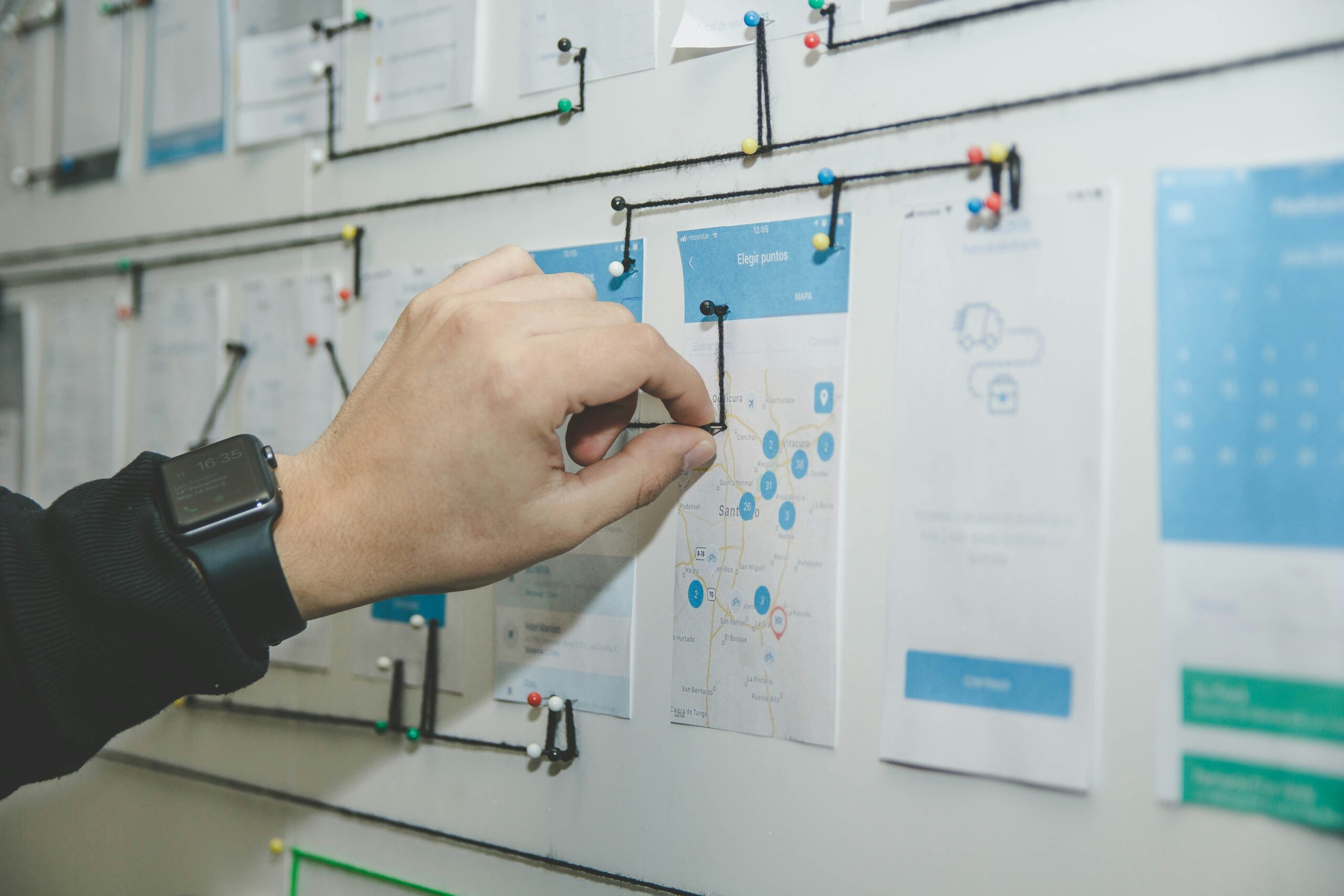
Creating a Personal Development Plan (PDP) is usually the first thing people do when they realize their life feels like a hamster wheel, but the problem is that most of these plans are just “wish lists” in disguise. You know the drill: you get inspired on a Sunday night, buy a $30 journal, write down “become a millionaire” and “get six-pack abs,” and by Tuesday afternoon, you’re back to scrolling through memes and eating cold pizza.
If you want the betest life possible in 2026, you have to stop planning like an amateur and start designing your growth like a CEO. We live in a world where AI agents can do your “busy work” and the global economy moves at light speed. A static, boring plan from 2010 isn’t going to cut it anymore.
This is the betsest guide you will ever read on how to build a Personal Development Plan that doesn’t just look good on paper but actually transforms who you are. No fluff, no “believe in yourself” posters—just straight execution.
1. Why 99% of Personal Development Plans Fail
Let’s get the ugly truth out of the way first. Most people fail because they mistake motion for action.
Check this: reading a book about productivity is motion. Actually time-blocking your calendar and turning off your phone is action. Most PDPs are built on motion. They are full of “I want to learn X” or “I want to be Y.”
But here’s the kicker: your brain loves the “feeling” of planning. It releases dopamine when you write down a big goal, making you feel like you’ve already achieved it. This is the “Dopamine Trap.” You feel successful without doing any of the hard work. To make a plan stick, we have to move past the feeling and get into the systems.
2. The 2026 Context: Why Personal Growth Changed
Anyway, we aren’t in 2019 anymore. In 2026, the game has changed. If your Personal Development Plan doesn’t account for these three things, it’s already dead:
- The Agentic Shift: You shouldn’t be learning how to do “basic” tasks. You should be learning how to prompt and manage AI agents to do them for you.
- Soft Skill Supremacy: Since AI handles the technical stuff, your value now lies in empathy, leadership, and “first principles” thinking.
- Mental Resilience as a Metric: In a world of infinite distractions, your ability to stay focused for 2 hours is a literal superpower.
3. Phase 1: The Radical Self-Audit (The Truth)
You can’t get to where you’re going if you’re lying about where you are. The betest PDPs start with a “Radical Self-Audit.”
Don’t just write down your strengths. That’s easy. I want you to look at your “bottlenecks.” What is the one thing that, if fixed, would make everything else easier?
- Is it your health? (You can’t build a business if you’re too tired to think).
- Is it your focus? (You’re working 8 hours but only doing 1 hour of real work).
- Is it your circle? (Your friends are “energy vampires” who keep you small).
The System: Take a piece of paper. Draw a line down the middle. On the left, write “Who I think I am.” On the right, write “What my bank account/calendar/body says I am.” The gap between those two is where your Personal Development Plan lives.
4. Phase 2: Defining Principles, Not Just Goals
Goals are “what” you want. Principles are “how” you live.
A goal is “I want to lose 20 pounds.” A principle is “I am the type of person who never misses a Monday workout.”
See the difference? Goals have an end date. Once you hit them, you stop. Principles are forever. To make your plan stick, you need to anchor it in an Identity Shift.
[Internal Link Idea: Link to your post about “Identity-Based Habits”]
The “North Star” Framework:
Pick three pillars for your life in 2026. For example:
- Financial Sovereignty: (Not just “more money,” but control over your time).
- Cognitive Clarity: (Deep focus, minimal noise, high-quality information).
- Physical Vitality: (Energy to execute at the highest level).
Every task in your PDP must serve one of these pillars. If it doesn’t, it’s trash. Throw it away.
5. Phase 3: The “Betsest” System Design (How it Sticks)
This is where the magic happens. We’re moving from “what” to “how.”
Habit Stacking 2.0
In 2026, we don’t just “add” habits; we stack them onto existing “anchors.”
- Old way: “I will meditate for 10 minutes.” (You’ll forget).
- 2026 way: “After I check my AI agent’s morning summary, I will meditate for 10 minutes.”
The anchor is something you already do. The habit is the new thing. This is how you build a Personal Development Plan that feels automatic.
The “Two-Pizza Rule” for Your Calendar
Just like Bezos’s meeting rule, if your daily “growth” tasks take more than two “pizzas” (blocks of energy) to finish, you’ve over-planned.
Keep your daily “Must-Dos” to three items. That’s it. If you do three things every day for a year, you will be in the top 1% of humanity. Most people try to do 20 things, fail at all of them, and quit by Wednesday.
6. Phase 4: Leveraging AI Agents (The 2026 Secret)
If your Personal Development Plan involves you manually tracking every calorie, every penny, and every minute, you’re going to burn out.
Check this out: Use AI to be your “Accountability Partner.”
- Automated Tracking: Use apps that sync your spending and health data to a dashboard.
- AI Tutoring: Don’t just watch YouTube. Use AI to create a custom curriculum for the skill you’re learning.
- Delegate the “Shallow”: If part of your plan is “organizing my files,” stop. Get an AI agent to do it. Spend your human energy on the deep stuff—the stuff only you can do.
7. Phase 5: The Feedback Loop (Radical Honesty)
A plan that doesn’t change is a dead plan. Life happens. You’ll get sick. A business deal will fail. You’ll have a “potato day” where you just watch Netflix.
The betsest people don’t beat themselves up; they adjust the system.
The Weekly Review:
Every Sunday, ask yourself:
- What went right? (Celebrate the wins).
- Where did I glitch? (Don’t say “I was lazy.” Say “The system failed because X”).
- What’s the 1% adjustment for next week?
The Monthly Pivot: Every 30 days, look at your PDP. Is that “new language” really helping you? If not, kill it. Your time is too valuable to spend on things that don’t move the needle.
8. Comparing Old PDPs vs. The 2026 System
| Feature | The Old “Weak” Way | The 2026 “Betsest” Way |
| Focus | Results (The “What”) | Systems (The “How”) |
| Tracking | Manual (Journals) | Automated (AI Agents/Dashboards) |
| Duration | Yearly (Resolutions) | Weekly (Sprints) |
| Motivation | Willpower | Environmental Design |
| Tech | Distraction (Phone) | Tool (AI Assistants) |
9. Environmental Design: Willpower is for Losers
Stop trying to “be more disciplined.” It’s a losing game. The betest way to make a Personal Development Plan stick is to make it impossible to fail.
- Want to read more? Put a book on your pillow every morning.
- Want to work out? Sleep in your gym clothes. (Yes, seriously).
- Want to stop checking your phone? Leave it in a different room during your Deep Work block.
You want to design your environment so that the “right” choice is the “easiest” choice.
10. The Identity Shift: Who Are You Becoming?
Long story short, a Personal Development Plan is actually a “Who Am I Becoming?” plan.
If you think of yourself as a “procrastinator who is trying to be better,” you will always be a procrastinator. If you think of yourself as a “High-Performance Executive,” you will naturally do the things a high-performance executive does.
Every action you take is a vote for the person you want to become.
- Drinking water? That’s a vote for a healthy person.
- Opening the laptop at 8 am? That’s a vote for a successful person.
- Checking Instagram for the 50th time? That’s a vote for a distracted person.
The Fix: Every time you’re about to do something, ask: “Is this what the betsest version of me would do?” If the answer is no, stop. It’s that simple.
11. Tools for a “Stickier” Plan (The 2026 Traffic Getters)
If you want to win, you need the right tools. Here is what’s actually working right now:
- Agentic AI Platforms: (For automating your research and scheduling).
- Wearable Tech: (For tracking “Real-time Stress” and “Biological Prime Time”).
- Digital “Focus” Spaces: (Apps that literally lock your computer until your task is done).
- Physical Journals: (Yes, even in 2026, writing with a pen is fire for your brain’s “Reticular Activating System”).
12. Summary: The 1% Rule
You don’t need to change your whole life today. You just need to be 1% better than you were yesterday.
If you improve by 1% every day, you will be 37 times better by the end of the year. That is the power of compounding interest. Most people over-estimate what they can do in a day, but they completely under-estimate what they can do in a year of consistent, 1% growth.
Build your Personal Development Plan. Start small. Use AI to handle the boring stuff. Audit yourself ruthlessly. And for the love of everything, just keep going.
https://jamesclear.com/atomic-habits : James Clear
The “Bestest” Conclusion
The world is moving fast. You can either be the person who gets left behind, or you can be the person who builds a system to thrive. Your Personal Development Plan isn’t just a document; it’s your ticket to a life of freedom, energy, and impact.
So, what’s the one thing you’re going to change today? Don’t think about it. Do it. Stay fire. Stay real. Go win.